A study led by researchers at the Biofisika Institute has described a conserved molecular mechanism that allows cells to transport choline, a nutrient essential for brain function.
Neurons need choline to produce acetylcholine, a neurotransmitter involved in memory, learning and muscle control. A multidisciplinary team with major participation from Igor Tascón’s group has now shown in detail how choline crosses the cell membrane and enters the neuron.
A molecular gate shared by bacteria and humans
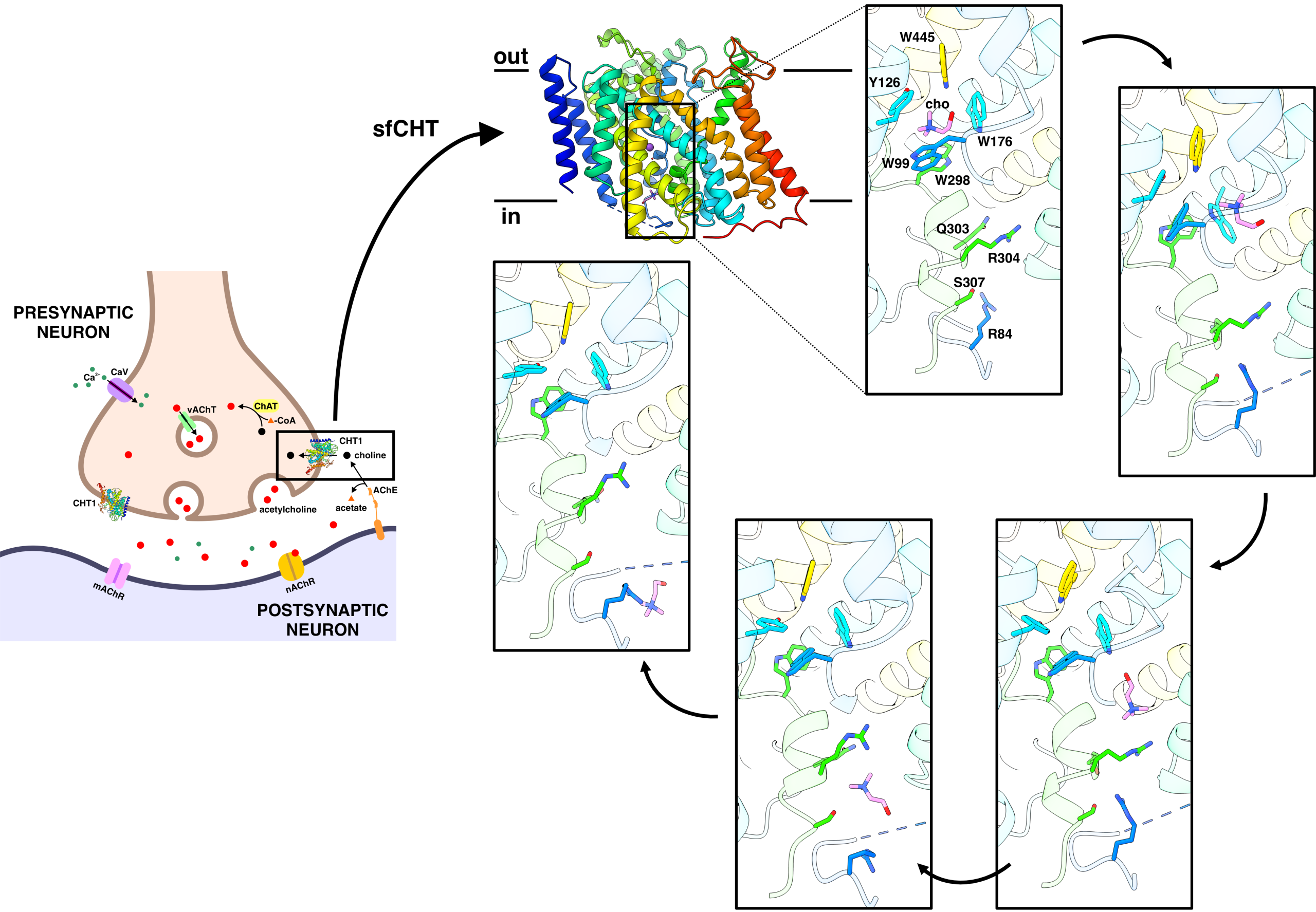
The study shows that bacteria and human cells use a closely related transport mechanism. Coordinated movements inside the transporter protein guide choline from the exterior of the cell to the interior, acting as a molecular gate.
The researchers combined high-resolution cryo-electron microscopy, computer simulations and functional experiments to observe different states of the transporter and trace the molecule’s route.
A key discovery
Because choline transport is directly linked to acetylcholine production, understanding this mechanism may help explain neurological and neurodegenerative disorders. Its conservation across evolution also indicates that it is a highly efficient biological solution.
The implications extend beyond the nervous system because choline also participates in cell metabolism and in bacterial adaptation to extreme environments.