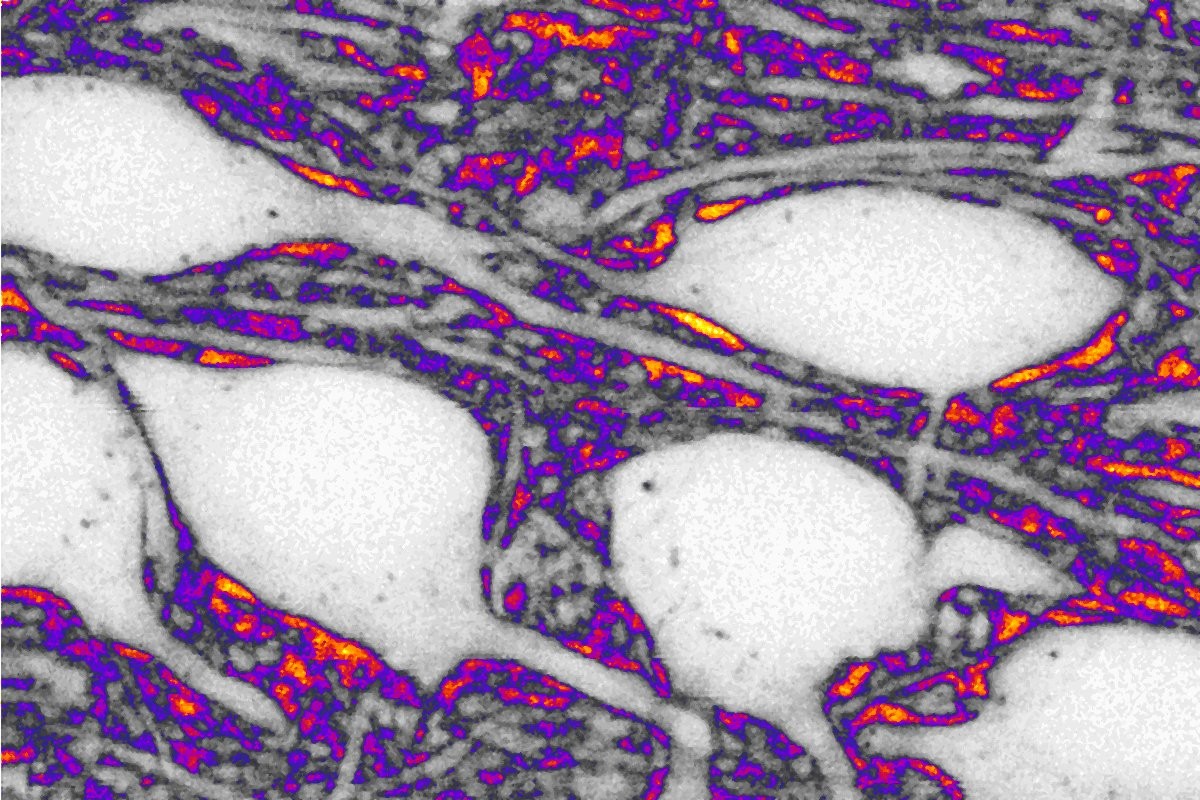
When we imagine the brain, we normally focus on neurons exchanging messages. New research shows that the microscopic space between neurons also plays an active role in brain function.
The study, led by Jan Tønnesen at the Biofisika Institute with collaborators in Texas, examines the extracellular space. Its shape and organisation affect how neurotransmitters travel and therefore influence the speed and precision of neuronal communication.
At excitatory synapses, associated with learning and memory, the surrounding geometry helps neurotransmitters clear rapidly. This limits interference with neighbouring synapses and preserves the independence of each connection.
At inhibitory synapses, the environment instead favours lateral spreading, reinforcing a background signal that helps regulate activity and avoid overexcitation.
The team combined ultra-high-resolution microscopy with computer models that reproduce molecular movement in brain tissue. The results show that extracellular space is not an empty passage, but an active component of neuronal signalling.
The finding may help researchers understand how ageing, injury and neurological disease alter communication in the brain.